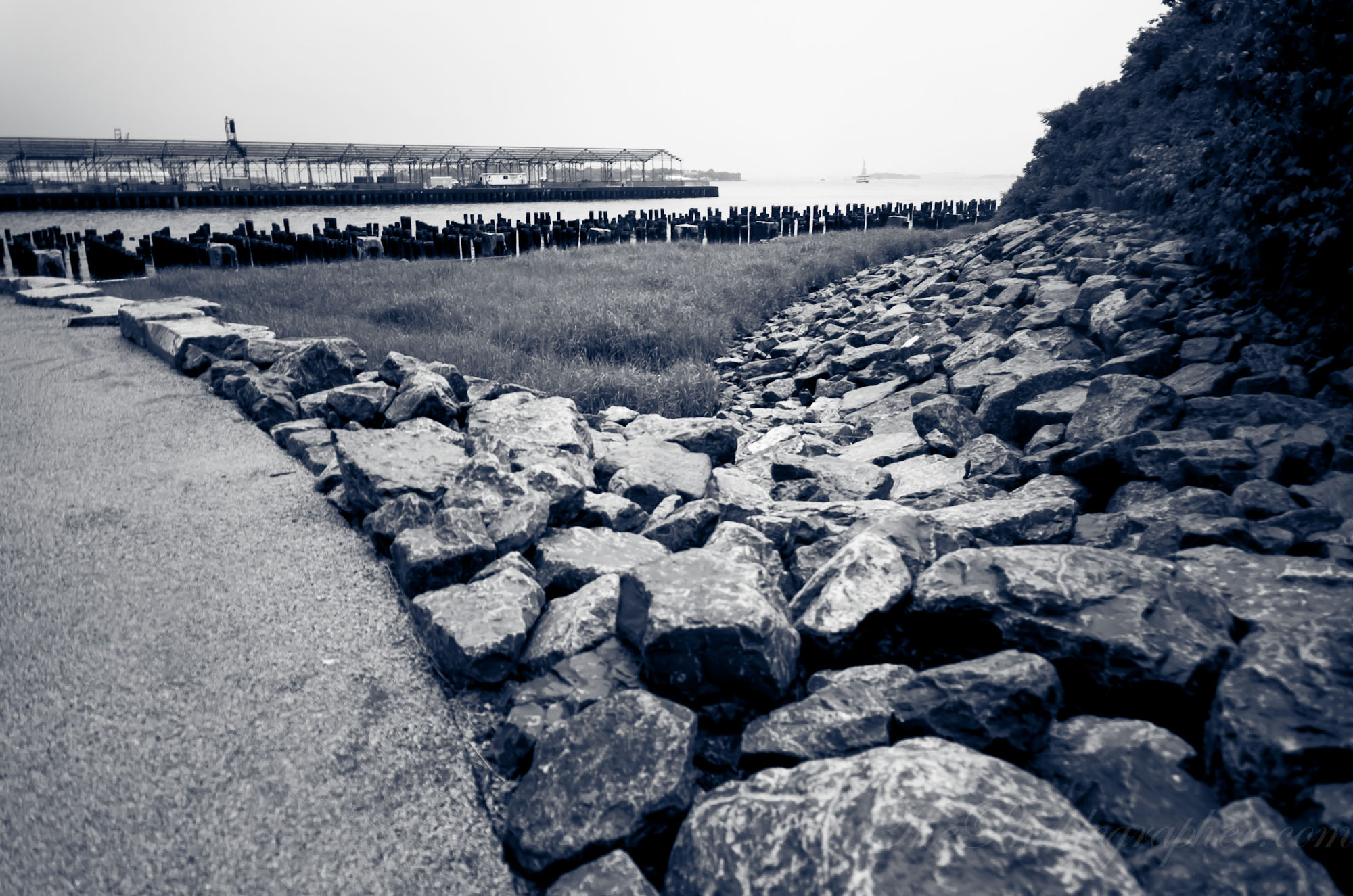
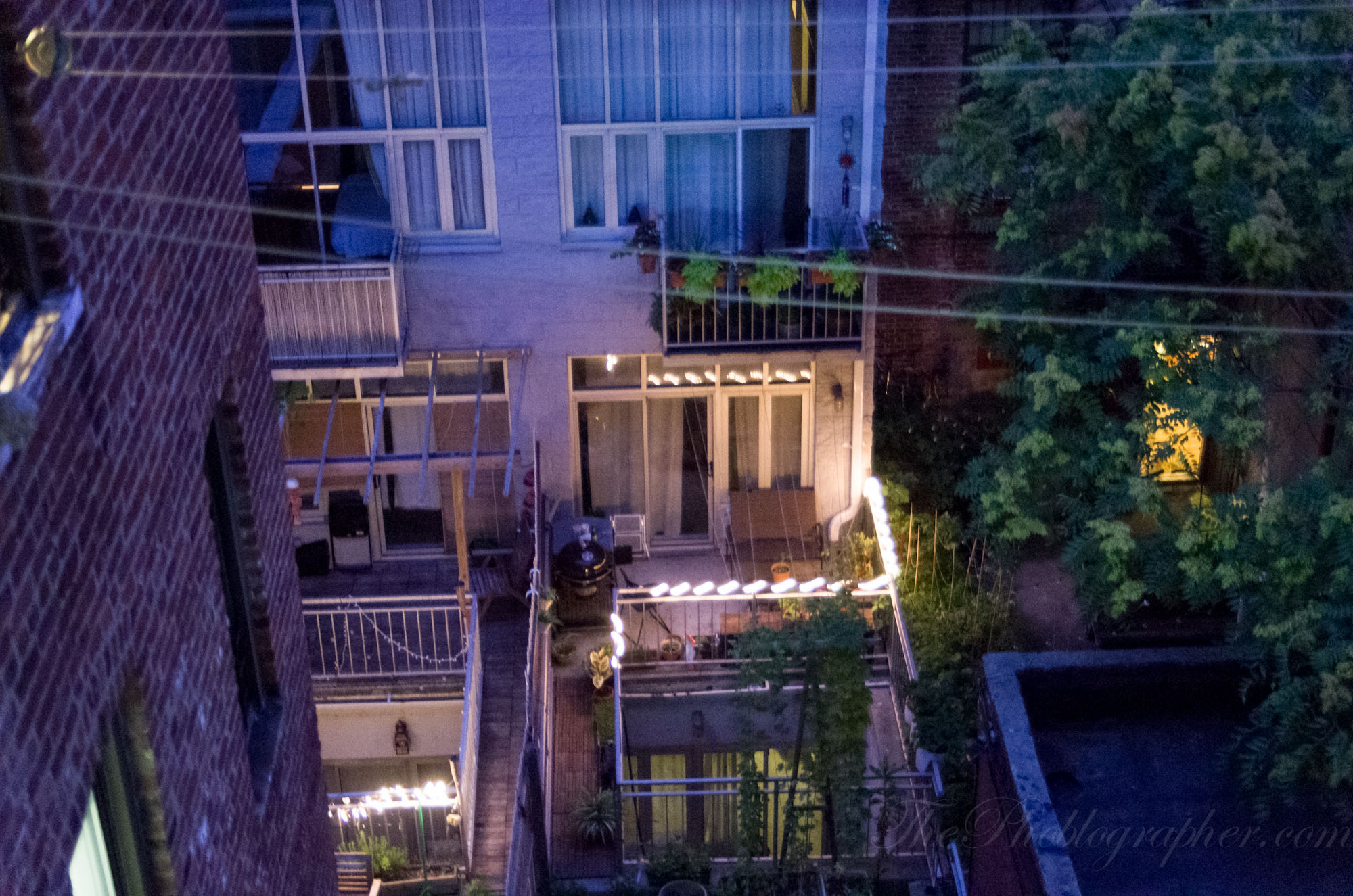
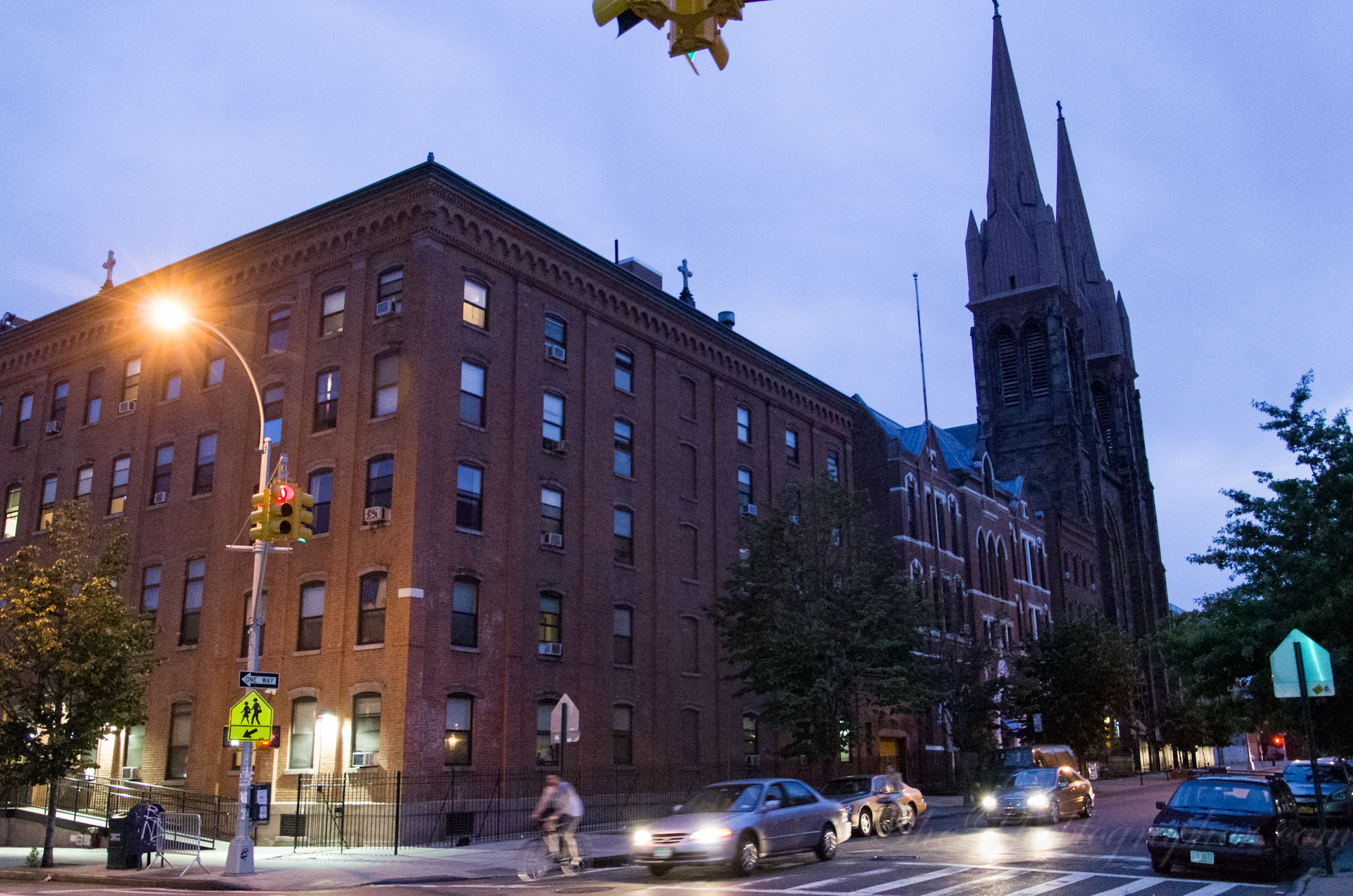
We’ve shown initial sample photos from the Pentax K-30 (K30) and we’ve also run the darned thing under a faucet. After about a month of use, constant communication with the company, and even calling in other products, the K30 is perhaps the most impressive entry level DSLR camera that we’ve seen. I’m not just saying that from my point of view, but this also applies to at least half the staff (who reside here in NYC) who have tried it out and also tried out other competing DSLR cameras.
In a nutshell: the Pentax K30 wins our Editor’s Choice, but it comes with its quirks.
Tech Specs
Specs taken from the B&H Photo listing of the item
| Imaging |
|---|
| Camera Type | Digital SLR with Interchangeable lenses |
| Lens Mount | Pentax K |
| Camera Format | APS-C / (1.5x Crop Factor) |
| Resolution | Effective Pixels: 16.3 Megapixels
Max Resolution: 16 MP: 4928 x 3264 |
| Aspect Ratio | 3:2, 16:9 |
| Sensor Type / Size | CMOS, 23.7 x 15.7 mm |
| File Formats | Still Images: JPEG, RAW
Movies: AVI, MJPEG, MPEG-4 AVC/H.264, MOV |
| Bit Depth | 12-bit |
| Noise Reduction | Not Specified By Manufacturer |
| Memory Card Type | SD
SDHC
SDXC |
| Image Stabilization | Optical |
| Focus Control |
|---|
| Focus Type | Auto |
| Focus Mode | Single-servo AF (S), Continuous-servo AF (C), Manual Focus (M) |
| Autofocus Points | 11 |
| Viewfinder/Display |
|---|
| Viewfinder Type | Pentaprism |
| Viewfinder Coverage | 100% |
| Viewfinder Magnification | Approx. 0.92x |
| Diopter Adjustment | - 2.5 to +1.5 m |
| Display Screen | 3.0″ Rear Screen Live Preview LCD (921000) |
| Screen Coverage | 100% |
| Live View | Yes |
| Exposure Control |
|---|
| ISO Sensitivity | Auto, 100-12800 (Extended Mode: 100-25600) |
| Shutter | Type: Electronic
Speed: 30 – 1/6000 sec |
| Remote Control | Optional |
| Mirror Lock-Up | No |
| Metering Method | Spot metering, Center-weighted average metering, Multi-zone metering |
| Exposure Modes | Modes: Aperture Priority, Auto, Manual, Program, Shutter Priority
Compensation: -5 EV to +5 EV (in 0.3 EV steps) |
| White Balance Modes | Auto, Cloudy, Custom, Daylight, Flash, Fluorescent, Fluorescent (Day White), Fluorescent (Natural White), Fluorescent (White), Shade, Tungsten |
| Flash |
|---|
| Built-in Flash | Yes: Flash On, Red-eye Reduction, Second-curtain Sync, Slow Sync, Slow Sync./Red-eye Reduction |
| Effective Flash Range | Not Specified By Manufacturer |
| Max Sync Speed | 1 / 180 sec |
| Continuous Shooting | Up to 9 fps |
| Dedicated Flash System | eTTL Remote Firing |
| External Flash Connection | Hot Shoe, Wireless |
| AV Recording |
|---|
| Video Recording | Yes |
| Audio Recording | With Video, Mono |
| Performance |
|---|
| In-Camera Image Editing | Filter Effects, Miniature Effect, Monochrome, Red-eye Correction |
| Start-up Time | Not Specified By Manufacturer |
| Shutter Lag | Not Specified By Manufacturer |
| Self Timer | 2 sec, 12 sec 1 |
| Interval Recording | Yes |
| Date & Time Stamp | Yes |
| Connectivity | 1x AV Output, USB 2.0 |
| Wi-Fi Capable (With Optional Transmitter) | No |
| Software Requirements | Not Specified By Manufacturer |
| Power |
|---|
| Battery | 1x PEDLI109 Replaceable Lithium-ion Battery, 7.4VDC, 1050mAh |
| AC Power Adapter | PEACAOK (Optional) |
| Operating/Storage Temperature | Operating
14 to 104 °F (-10 to 40 °C) |
| Physical |
|---|
| Dimensions (WxHxD) | 4.8 x 3.1 x 2.3″ / 12.19 x 7.87 x 5.84 cm |
| Weight | 20.7 oz / 587 g No battery or memory card |
Ergonomics
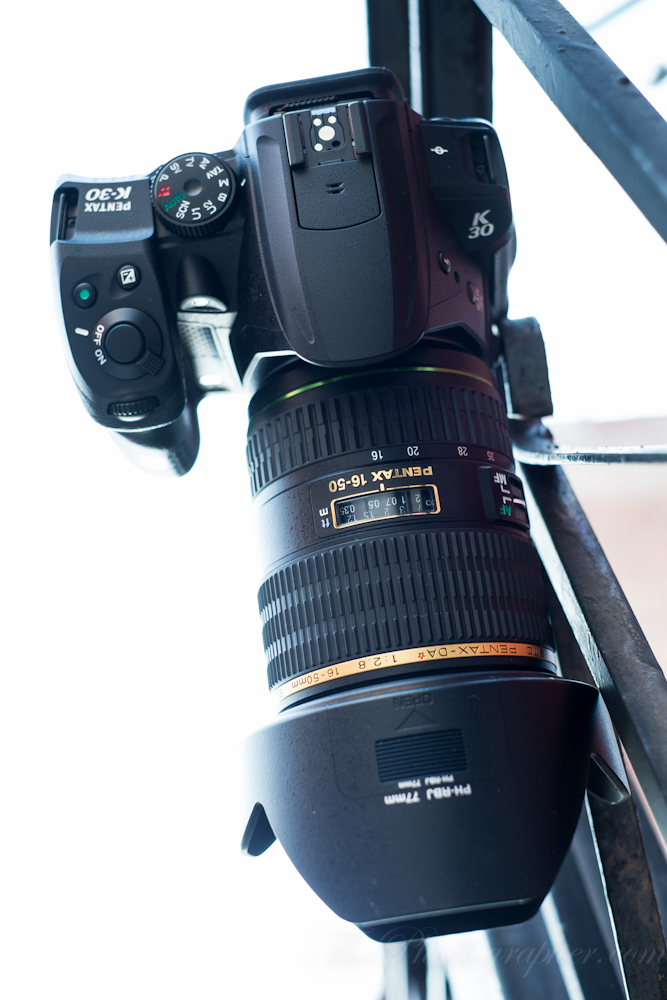
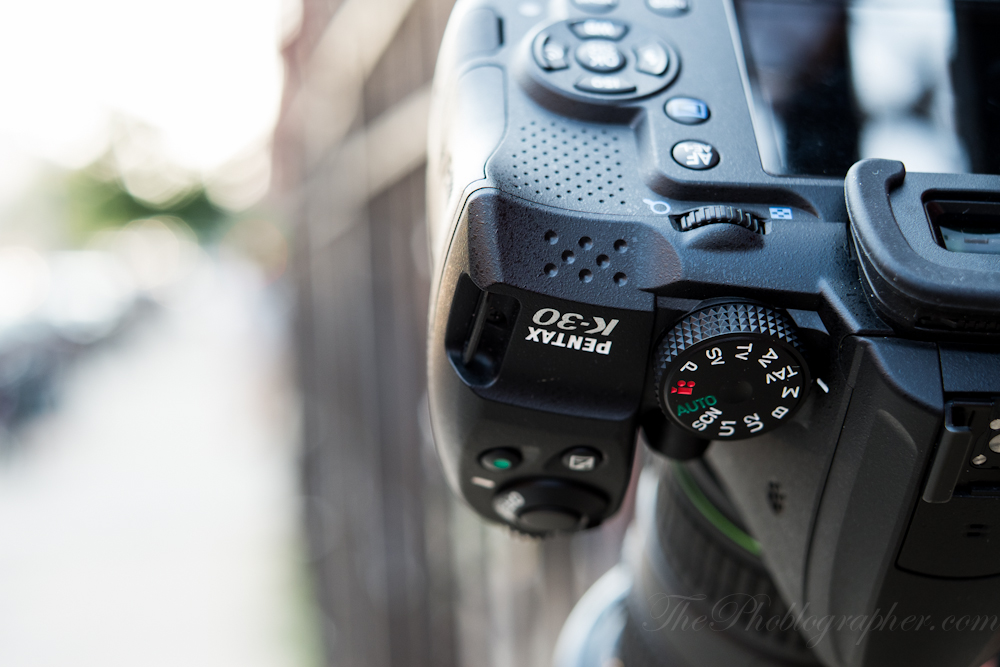
The Pentax K30 is an extremely beefy DSLR for the price point and for the audience it is targeted towards. Most prominently, I’d emphasize just how comfortable the grip on the camera is. On said grip, what you’ll also notice is an infrared trigger light there as well. That is also where the on/off switch, shutter release button and the program exposure and exposure compensation button are located.
Around here is also the first of two control dials as well. Yes, Pentax put two dials for exposure on the K30, and it is a godsend in terms of ergonomic comfort and control.
On top of the camera is the mode dial: which also includes some Pentax custom modes that are assigned to specific dials as it is. Plus there is a textured thumb grip area that adds to the overall comfort of the camera.
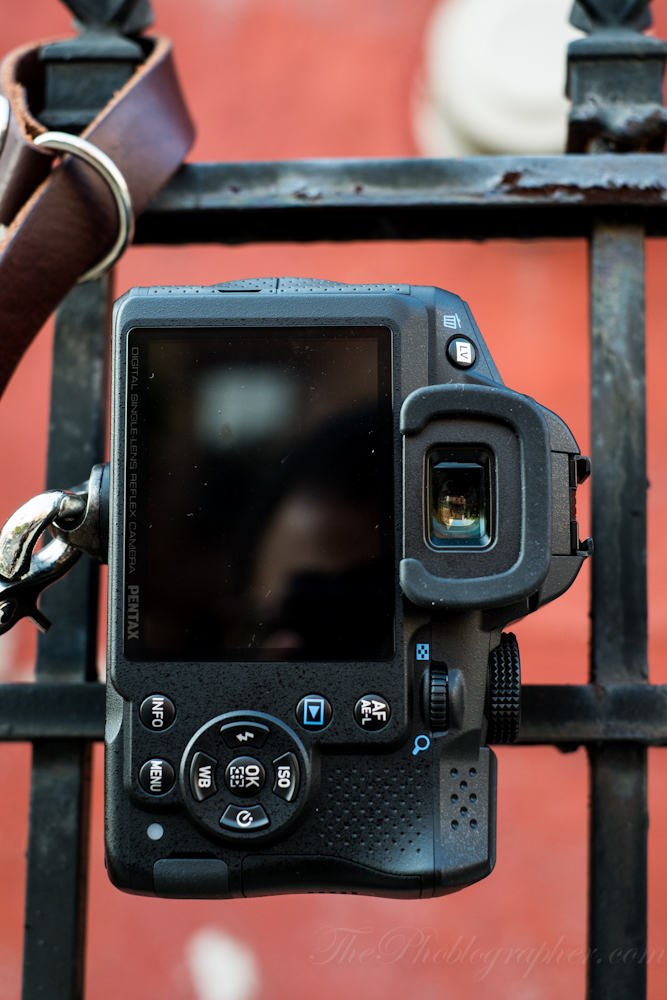
The back of the camera is characterized by quite a brilliant LCD screen and the viewfinder above that. To the right of all this are the main controls. To the top left is the Live View/Delete button. Honestly, I wish this were on the right side as well. It would just make more sense in real life use.
Autofocus
I need to get this part out of the way, and unfortunately it is probably the camera’s biggest pitfall. The autofocus on the Pentax K30 isn’t exactly the greatest and in fact it was sometimes extremely frustrating. While on a shoot with a model, I didn’t always have time to pixel-peep my images to ensure that I had absolute focus. Plus, the LCD screen was just so sharp that I honestly thought that I did. But utilizing the outer focusing points caused some major problems.
First off, when you’re trying to take portraits, you have a couple of choices:
- Set the camera to automatically choose from 11 autofocus points (a fairly viable option)
- Set the camera to automatically choose from 5 (not so much that viable when it comes to portraiture)
- Manually select one of 5 points (therefore disabling the ability to use all of the other settings assigned to the hot keys such as wireless flash control fine tuning, ISO control, etc.)
- Manually select one of 11 focusing points (the most viable option but with the drawbacks of the previous fact.)
In a case like the photo to the left, I needed to use one of the outer focusing points and hitting Jamie’s eye wasn’t exactly the simplest thing to do. My original vision was to have the lens wide open and only have a bit of fill flash coming in using the AF-540Z in a Photogenic SB2432 with a Chimera Speedlite Speedring. Instead, I needed to stop down and blast Jamie with light.
So why do I need to use the outer focusing points to begin with? Why couldn’t I focus and recompose? Because then I’d throw off the plane of focus. It would be nice if Pentax utilized something like Hasslebald’s TruFocus system that was designed for those types of photographers.
When the focusing was spot on though, it nailed some extremely nice images and the potential of the K30′s sensor combined with the very good 16-50mm f2.8 DA * was fully realized.
Something else that must be praised was the fact that the image stabilization system built into the sensor seemed to rival Olympus’s. And that’s a bold statement.
Here are some other images from that shoot:
See how the focus is right behind Jamie? I was aiming for her eye.
Something else that also must be stated is that Pentax’s P-TTL system seemed to work best when the flash was in the hot shoe and not in a modifier. These images in the bedroom were all taken by bouncing the flash off of the wall.
Ease of Use
Sans the autofocusing issues that I encountered, the Pentax K30 was extremely simple and straightforward to use, for stills that is. When it came to video, I encountered a problem that hopefully Pentax will fix with a future firmware update (from the time of publishing this piece). In video mode, a true videographer would want to shoot in manual video mode. When doing this, only the shutter speed and ISO can be adjusted: not the aperture. That’s a big problem; and instead I would probably opt for third party glass in this case.
The biggest joy though probably came from the fact that I was able to go out and shoot in the absolute pouring rain with no issues at all. The camera was drenched but survived it all like a champ.
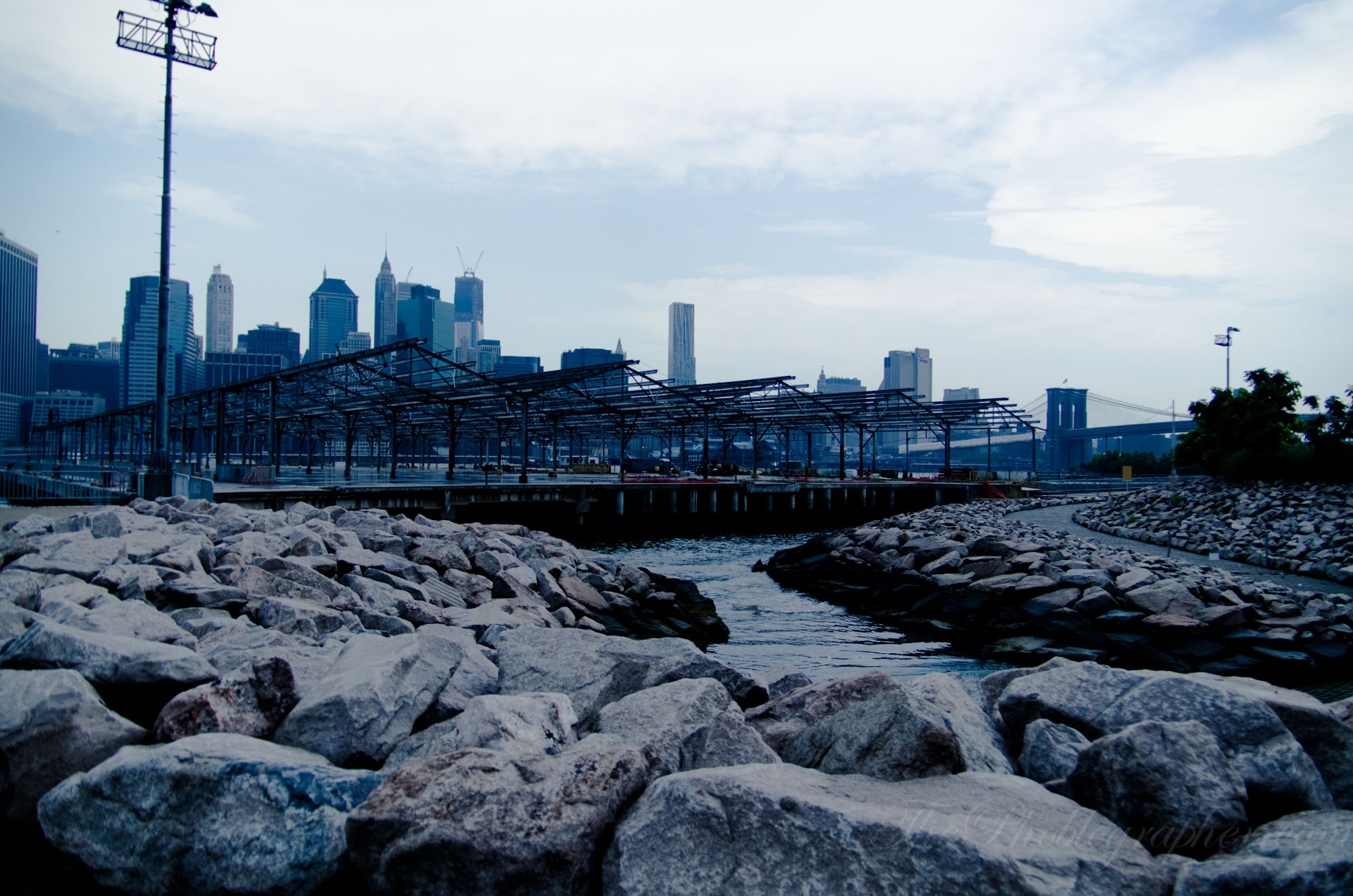
Indeed, Dumbo in Brooklyn became so flooded that boats were ready just in case of anything since it is right by the water.
Image Quality
The overall image quality from the camera was exceptional, though at times I wished that the colors out of the camera were a bit more saturated than they were and that the green color depth could have been a tad bit deeper. Here are some images not only showing off the image quality, but also the versatility of the files when put to the test in
Adobe Lightroom 4.
High ISOs
Overall, I did see a little bit of smudging of details at the higher ISOs. However, the noise levels were nearly negligible and it required only moving the slider around one or two places in Lightroom 4 to correct it.
What must be said though is the fact that the camera white balances and captures some really, really wonderful colors at night and at higher ISO settings. Pentax did an excellent job with this.
Metering
Pentax is spot on with the metering. During my excursion with the rest of the NYC Press, I did formal Sunny 16 tests and the camera’s meter worked perfectly with the logic.
With that said, I would not be afraid to use it with manual flashes and studio strobes like anything from
Profotoor
Elinchrom.
Conclusions
For the audience that this camera is targeted towards, Pentax has given them quite a bit of power. Due to the ergonomics and including two dials, the user can grow significantly with this camera. When you reach a certain point, you often don’t want to have to press the exposure button in order to switch the aperture and shutter speed. To boot, this camera has a great sensor, is weather sealed, and is still fairly light though beefy feeling at the same time.
My only problem was the autofocus system, which I truthfully consider to be a tad bit worse than the Canon 5D Mk II’s. I know that Pentax fans will try to rip us apart for that, but our tests showed otherwise.
If you can get over the autofocus system, I highly encourage you to spring for the Pentax K-30 and enjoy their line of limited prime lenses and their constant aperture zooms.
Please Support The Phoblographer
We love to bring you guys the latest and greatest news and gear related stuff. However, we can’t keep doing that unless we have your continued support. If you would like to purchase any of the items mentioned, please do so by clicking our links first and then purchasing the items as we then get a small portion of the sale to help run the website.